Skip to content
  • Microscopic view of aquatic pathogens representing emerging disease threats to NZ fisheries and aquaculture.

    Thriving Aquatic Ecosystems

    Mai i ngā maunga, ki te moana | From mountains to sea.

    Enhancing marine and freshwater environments

    Aotearoa New Zealand is defined by water. Our rivers, lakes, estuaries, coasts and oceans support biodiversity, food production, cultural identity and community wellbeing. After more than a century of pressure, the need to protect and restore these systems has never been greater.

    Cawthron works with iwi, hapū, communities, government and industry to rejuvenate aquatic ecosystems and help the people and sectors that depend on them thrive alongside them.

    This mission is focused on active regeneration. That means restoring connections from mountains to sea, defining safe environmental limits and developing the monitoring and decision-support tools needed to manage aquatic environments with confidence.

    Cawthron brings more than a century of independent aquatic science to this work. Our approach combines scientific expertise with mātauranga Māori, local knowledge and kaitiakitanga.

    Summary of key actions

    • Monitor freshwater, coastal and marine ecosystem health

    • Assess and forecast environmental change

    • Support spatial planning and connected aquatic ecosystems

    • Define safe environmental limits for industry and development

    • Develop aquatic restoration and nature-based solutions

    • Support environmental policy, decisions and sustainable resource management

    • Partner with communities to restore and care for aquatic ecosystems

    Monitor freshwater, coastal and marine ecosystem health

    Cawthron develops and applies monitoring frameworks, indicators and reporting tools that show how aquatic ecosystems are changing over time.

    Our work includes field surveys, molecular methods such as eDNA, environmental data analysis and national reporting systems. This helps government, councils, iwi, communities and industries understand ecosystem health and make better-informed decisions.

    Cawthron researcher Xavier Pochon deploying an eDNA sampling net from a vessel at cruising speed, 2022.

    Assess and forecast environmental damage

    Cawthron develops models that assess how human activities, climate change and other pressures may affect freshwater, coastal and marine environments.

    These tools help decision-makers understand likely future conditions, compare management options and act before environmental change becomes harder or more costly to address.

    Cawthron researcher mapping habitat along a New Zealand stream for aquatic ecosystem assessment.

    Support spatial planning and connected aquatic ecosystems

    Healthy aquatic environments depend on the connections between rivers, lakes, estuaries, coasts and oceans.

    Cawthron develops spatial planning and connectivity tools to guide restoration, conservation, species and habitat management and sustainable marine development. This helps decision-makers consider how activities in one place may affect the wider aquatic system.

    Cawthron team preparing field equipment to map Wairau Lagoon, Marlborough, 2015.

    Define safe limits for industry and development

    Cawthron helps establish science-based thresholds for the pressures aquatic environments can withstand while remaining healthy and resilient.

    Our work supports decisions about activities including aquaculture, agriculture, forestry, ports, wastewater discharges and emerging ocean-based technologies. These limits provide a clearer basis for consenting, regulation, environmental management and responsible development.

    Cawthron scientist Kati Roland conducting fieldwork or laboratory analysis.

    Develop aquatic restoration and nature-based solutions

    Cawthron develops and tests practical ways to restore freshwater, coastal and offshore ecosystems.

    This includes designing restoration approaches, measuring their benefits and exploring how marine space can be used to support habitat recovery and ecosystem enhancement. We work with iwi, councils, community groups, government and industry to turn restoration science into action.

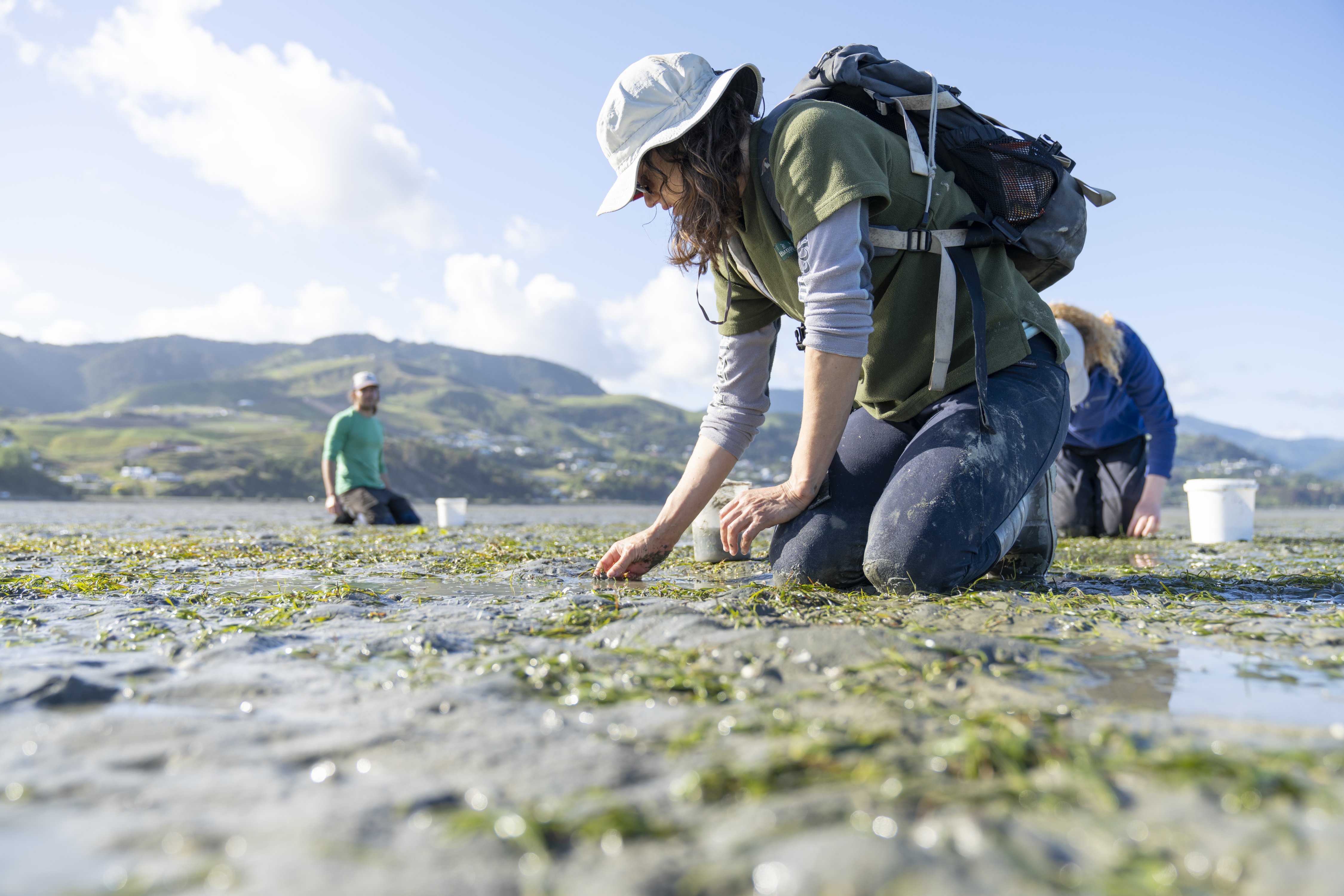
    The Living Filters bioremediation project team working on a coastal water quality project.

    Support environmental policy, decisions and sustainable resource management

    Cawthron provides independent science, advice and decision-support tools to help government, councils, iwi, communities and industries manage aquatic resources more sustainably.

    Our work can inform policy, planning, consenting, conservation, restoration and the management of activities across aquaculture, transport, energy, agriculture, forestry and irrigation.

    Waituna Creek, Southland, during environmental assessment fieldwork, March 2019.

    Partner with communities to restore and care for aquatic ecosystems

    Lasting environmental improvement depends on the people who live, work and hold responsibilities in a place.

    Cawthron works with iwi, hapū, communities and local organisations to combine scientific evidence with mātauranga Māori and local knowledge, build shared understanding and support coordinated action. We also recognise and celebrate the contribution of people working to improve aquatic ecosystem health.

    Community volunteers planting native plants during a Cawthron community planting day, 2022.

    Mountains to sea - Te Tauihu

    Beyond our core services, Cawthron is investing in a long-term flagship science platform - Mountains to sea: Te Tauihu - that aims to protect and enhance aquatic ecosystems from the mountains to the sea across the Top of the South Island. Our goal is to create a scalable model for community-led restoration that restores thriving habitats, boosts biodiversity, and supports productive fisheries and mahinga kai.

    Through piloting and implementing new aquatic restoration solutions in partnership with iwi, the Department of Conservation, councils, and community groups, this programme is developing the approaches and tools that can be applied across New Zealand and beyond. Partners who engage now will help shape a restoration legacy for Te Tauihu - and gain access to the science and expertise driving it.

    Cawthron freshwater ecologist Simon Stewart at the Maitai Dam aeration project, Nelson, 2025.

    News and case studies

    Work with us

    Whether you are a council seeking to improve the health of your freshwater catchments, an iwi working to restore mahinga kai, a government agency developing environmental policy, or an industry operator looking to improve your environmental credentials, Cawthron has the science, the relationships, and the track record to support you.

    The Living Filters bioremediation project team working on a coastal water quality project.